
In literature, movies, and our everyday lives, we encounter a diverse range of characters. We are all familiar with loudmouths, ostentatious egos, and modest individuals around us, as well as those who excel in integrity or succumb to dishonesty. These varied personalities shape our interactions and experiences, contributing to the rich tapestry of human behavior.
As optimists yearning for fairness in this world, we believe that if we work hard enough, success will eventually come. However, understanding empathy and its impact on relationships is crucial in navigating these diverse personalities effectively. Empathy allows us to see beyond surface behaviors and understand the underlying motivations and emotions of others.
To delve deeper, let’s consider how empathy plays a pivotal role in achieving both personal and professional success. By practicing empathy, we can bridge gaps between different character types, fostering a more inclusive and harmonious environment.
For instance, understanding why a colleague might be boastful or why another might be reserved can help us respond more constructively and create stronger connections. This understanding not only enhances our relationships but also contributes to a more empathetic and effective approach to collaboration and teamwork. Empathy drives us to look beyond our judgments, fostering mutual respect and paving the way for collective growth and success.
Empathy and its Impact on Relationships
As we mature in our professional lives, we form more nuanced opinions about what it takes to progress. We realize that being technically proficient is not the only ingredient in the recipe for success. This realization brings us to a vital but often overlooked factor: empathy and its impact on relationships. We’ve all witnessed talented individuals left by the wayside while less capable workers move up the ladder. What’s behind this discrepancy?
Consider Judith, a capable junior lawyer. She has studied hard and is skilled, but isn’t getting promoted. Meanwhile, she watches less capable peers advance above her. What’s the problem? Judith struggles with social skills. She appears distant at the water cooler while others chat, her colleagues think she’s ‘dry,’ and clients don’t warm to her. Judith finds it difficult to smile or hold eye contact. Here, we see a clear example of how empathy and its impact on relationships can affect one’s professional trajectory.
You probably know someone similar to Judith or perhaps even see yourself in her. If you know a Judith, you likely think, “If only they could get along with people better, they’d do so well.” If you identify with Judith, you’re probably very frustrated that your excellent work isn’t receiving the recognition it deserves while the boss rewards friendly mediocrity. This highlights how crucial empathy and its impact on relationships truly is.
It can be frustrating, it can cause conflict, and it can be detrimental to business. Quality work can be sacrificed when personal relations are less than ideal. While we have well-established pathways for building our professional skills through schools and universities, we often neglect the interpersonal skills that are just as important.
There is a common belief that social skills are purely a function of personality; therefore, there isn’t much we can do about it. This is not true. We can develop our ability to empathize with others—the foundation of good interpersonal relations—and, in doing so, significantly improve our professional and personal lives.
What is Empathy?
Empathy is the capacity to be aware of and understand the emotions of others. It’s not just about understanding what someone else is saying, it involves feeling their experience as if it were your own – so that you can respond in kind. This isn’t a conscious process but an innate ability we all possess to some degree, and one that can be developed with practice.
The key to personal growth lies in developing self-discipline; this includes empathising with our peers and colleagues. Achieving personal growth requires effort, dedication, focus and self-control. We need to know how to control our reactions when faced with difficult people or situations – this is where personal values come into play: they give us a sense of identity, purpose, personal direction and moral guidance.
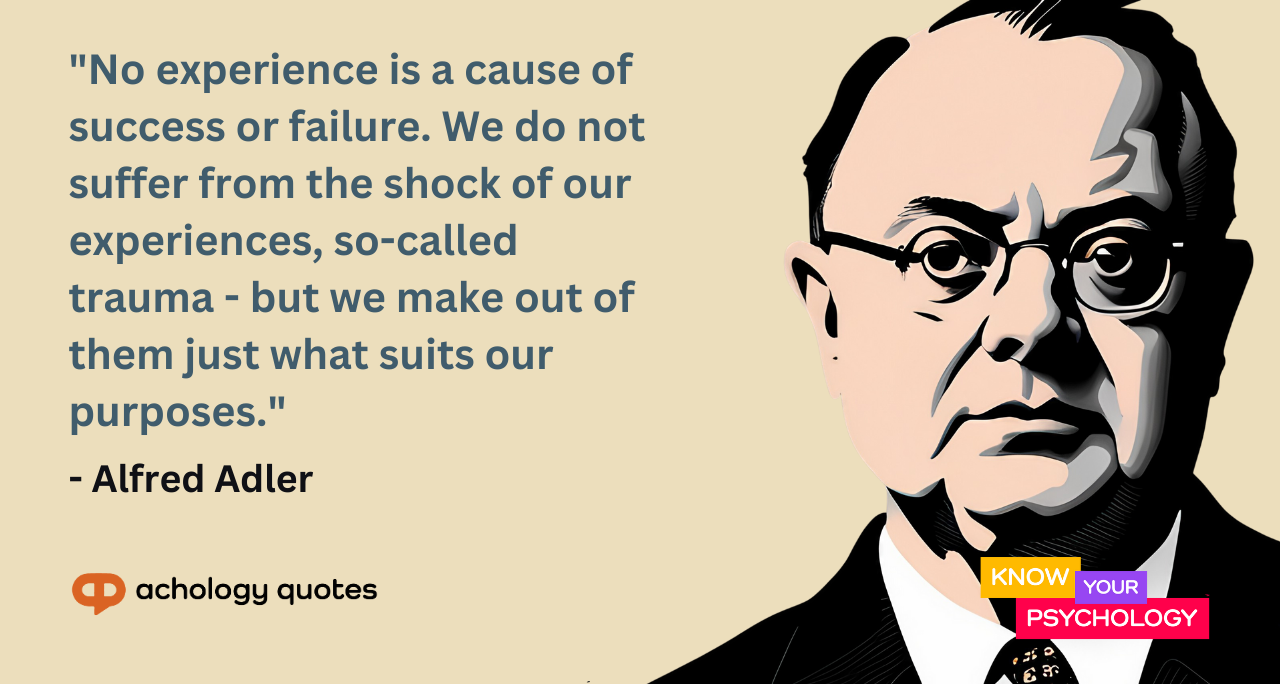
“Empathy is seeing with the eyes of another, listening with the ears of another and feeling with the heart of another.” – Alfred Adler
The current state of research into empathy categorises two different forms, emotional empathy and cognitive empathy. Emotional empathy can be subdivided into three components; the first is to feel the same emotion as another person. This is often known as emotional contagion. So if someone bursts into tears, the next person can also start to feel sad and start crying.
The second is personal distress which refers to your feeling of suffering in response to recognising someone else’s. This suffering may or may not mirror the suffering of the first person, so if one person is suicidal, the next may feel distressed, but not suicidal. The third component, feeling compassion, is the most developed of the three. It is generally considered that compassion requires more self-control than the former two, although the first two lay the groundwork for its development.
Cognitive empathy refers to the extent to which we successfully guess the emotional state of another. It can be highly sophisticated, but it does not contain the same ‘feeling’ component as emotional empathy, therefore could be used in a cynical way rather than a beneficial way. [1]
Compassion, also called empathic concern, is the form most useful to developing beneficial behaviours, that not only aid social relations but have a more beneficial impact on society as a whole. Cognitive empathy could also be used in the workplace, but if used to manipulate rather than work to the common cause, then it could have unforeseen negative consequence.
Before we consider how to develop and utilise empathetic skills, it is worth noting that neuroscience has identified an “empathy circuit” in our brains, called the right supra-marginal gyrus, which if damaged can adversely affect our ability to understand what others are feeling. This circuit allows us to differentiate our perception of ourselves from that of others. [2]
The work of behavioural scientist, Frank de Waal, also shows that we are as a species hard-wired to some form of empathy, as our primate cousins display the same traits. [3]
Developing your Empathy
The good news is that empathy can be learned. In a study by the University of Wisconsin-Madison, participants were trained to practice a form of ‘compassion meditation’, as followed in the Buddhist tradition. They also repeated phrases to enable them to focus on compassion, such as, “May you be free from suffering. May you have joy and ease”. They practised this while focussing on a sliding scale of difficulty, from people that they already loved, through strangers to those who they may actively dislike.
Another group went through a similar process, but not with meditation but ‘cognitive reappraisal’ in which they attempted to consciously change the way they thought, with the aid of instruction. The results showed that after two weeks of practice, the meditative group displayed a marked increase in empathy and altruism. They also showed a greater increase than the cognitive group. It also showed that increased compassion alters the structure of the brain in a way that is visible in an fMRI scan. [4]
As well as the meditation-based approach, there are straightforward exercises that, if practiced regularly, will also help you cultivate a deeper state of empathy towards others. These exercises include:
1. Practicing Active Listening
Practicing active listening goes beyond merely hearing what someone is saying. It involves fully engaging with the speaker, ensuring they feel heard and understood. Active listening requires you to repeat back what the other person has said in a non-judgmental way, acknowledging their feelings and priorities.
For instance, if a colleague expresses frustration about a project delay, you might respond, “It sounds like you’re feeling frustrated because the project timeline has been extended, and that’s affecting your plans.” By focusing on the speaker’s emotions and priorities, you validate their experience and demonstrate genuine interest in their point of view.
2. Role Playing
Role-playing exercises can be incredibly effective in developing empathy. This activity can be conducted with a partner or even alone, but it is essential to switch roles after each exercise to gain multiple perspectives. You can create various scenarios that encourage the development of empathy skills, reflecting personal values and ethical considerations.
For example, one role-playing scenario could involve a discussion between an employer and an employee who is seeking a flexible work arrangement. By switching roles, you learn to see the situation from both the employer’s and employee’s perspectives, enhancing your ability to understand different needs and motivations.
3. Writing Exercises
Writing exercises are another powerful tool for developing empathy. These activities may involve writing about personal experiences or imagined scenarios, requiring you to think from another person’s perspective rather than your own. For instance, you might write a diary entry from the viewpoint of a historical figure, a fictional character, or even a friend going through a challenging time.
This practice helps you put yourself in someone else’s shoes, fostering a deeper understanding of their emotions, thoughts, and actions. Additionally, reflective writing prompts, such as “Describe a time when you felt misunderstood and how it affected you,” can also enhance your empathetic abilities by connecting you more intimately with your own feelings and experiences.
By incorporating these exercises into your routine, you can systematically build and strengthen your empathetic abilities, leading to more compassionate and effective interactions with others.
Often, if we end up judging someone, it is because we apply our mental state and understanding to their actions without any knowledge of another person’s situation. If we practice suspending our perspective and instead attempt to see through the other person’s eyes to understand their conditions, we will step closer to empathy. This practice underscores the importance of empathy and its impact on relationships.
For example, if I described to you a man who was a German industrialist during World War II, who owned ammunition factories that operated in occupied Poland, and who, in 1938, was collecting information on railways and troop movements for the German government, you might assume he was a villain. This man, who was arrested for espionage by the Czech government and was a member of the Nazi party, might seem like one of the evil individuals who profited from war and misery. However, his name is Oskar Schindler, and he saved the lives of over 1,200 Jews whom he kept from concentration camps. He is a hero and the subject of Spielberg’s film, “Schindler’s List.” This example illustrates how we must avoid leaping to judgments and seek to understand others and their sometimes complicated circumstances.
We’ve all jumped to conclusions at some point, and we’ve all felt the sting of being judged unfairly by those unwilling to understand us. Once you can see why others act the way they do, it is crucial to acknowledge their point of view. You do not have to agree, but by respecting their opinion and recognizing that you may not fully understand the reasons behind their decisions, you maintain an open and receptive outlook. This approach further highlights empathy and its impact on relationships.
It’s also helpful to go one step further than setting aside your perspective by examining it. Are your motivations good? Are you trying to win at all costs? Do you need to be right? Do you feel the need to take a contrary position with everyone you speak to? By asking yourself these searching questions, you can begin to root out the negative motivations that prevent you from empathizing with others.
When listening to others, listen to their entire message:
- Listen with your ears: What is being said, and what is the tone?
- Listen with your eyes: What is their body language?
- Listen to your instincts: What is your gut telling you?
- Listen with your heart: How do you think the other person is feeling?
Invite the other person to share their opinion and understanding, and ask for clarification if needed. Engage with them genuinely to understand their perspective. Resist the urge to interject with your opinion, but if you need to correct a fact, do so kindly. Be flexible if their argument is solid and be prepared to shift your position. Managing this will indeed make you appear and be a more open, receptive person with an enhanced ability to communicate effectively.
Working on empathy is now understood to be fundamental to business success. The Centre for Creative Leadership conducted a study of 6,731 managers from 38 countries. They found that when employees rated their managers as good empaths, it positively predicted how a manager’s boss evaluated their performance. In other words, empathy makes you better at your job, especially if you need to relate to a community of people. By exercising discipline and striving to understand others empathetically, you can significantly improve both your personal and professional relationships.
References:
1. Hodges, S.D. & Myers, M.W (2007). Empathy. In R. F. Baumeister and K. D. Vohs (Eds.). Retrieved from: http://pages.uoregon.edu/hodgeslab/files/Download/Hodges%20Myers_2007.pdf
2. Bergland, Christopher (10 Oct 2013). The Neuroscience of Empathy. Psychology Today. Retrieved from: https://www.psychologytoday.com/blog/the-athletes-way/201310/the-neuroscience-empathy
3. De Waal, Frank (1st Sep 2005). The Evolution of Empathy. Retrieved from: https://greatergood.berkeley.edu/article/item/the_evolution_of_empathy
4. De Shaw Rowe, Alison. (22nd May 2013). Brain Can Be Trained in Compassion. Association for Psychological Science. Retrieved from: https://www.psychologicalscience.org/news/releases/compassion-training.html
5. Empathy at Work. Retrieved from: https://www.mindtools.com/pages/article/EmpathyatWork.htm
6. Gentry, W.A., Weber, T.J. & Sadri, G. (Nov 2011). Empathy in the Workplace – A Tool for Effective Leadership. Centre for Creative Leadership. Retrieved from: https://www.ccl.org/wp-content/uploads/2015/04/EmpathyInTheWorkplace.pdf