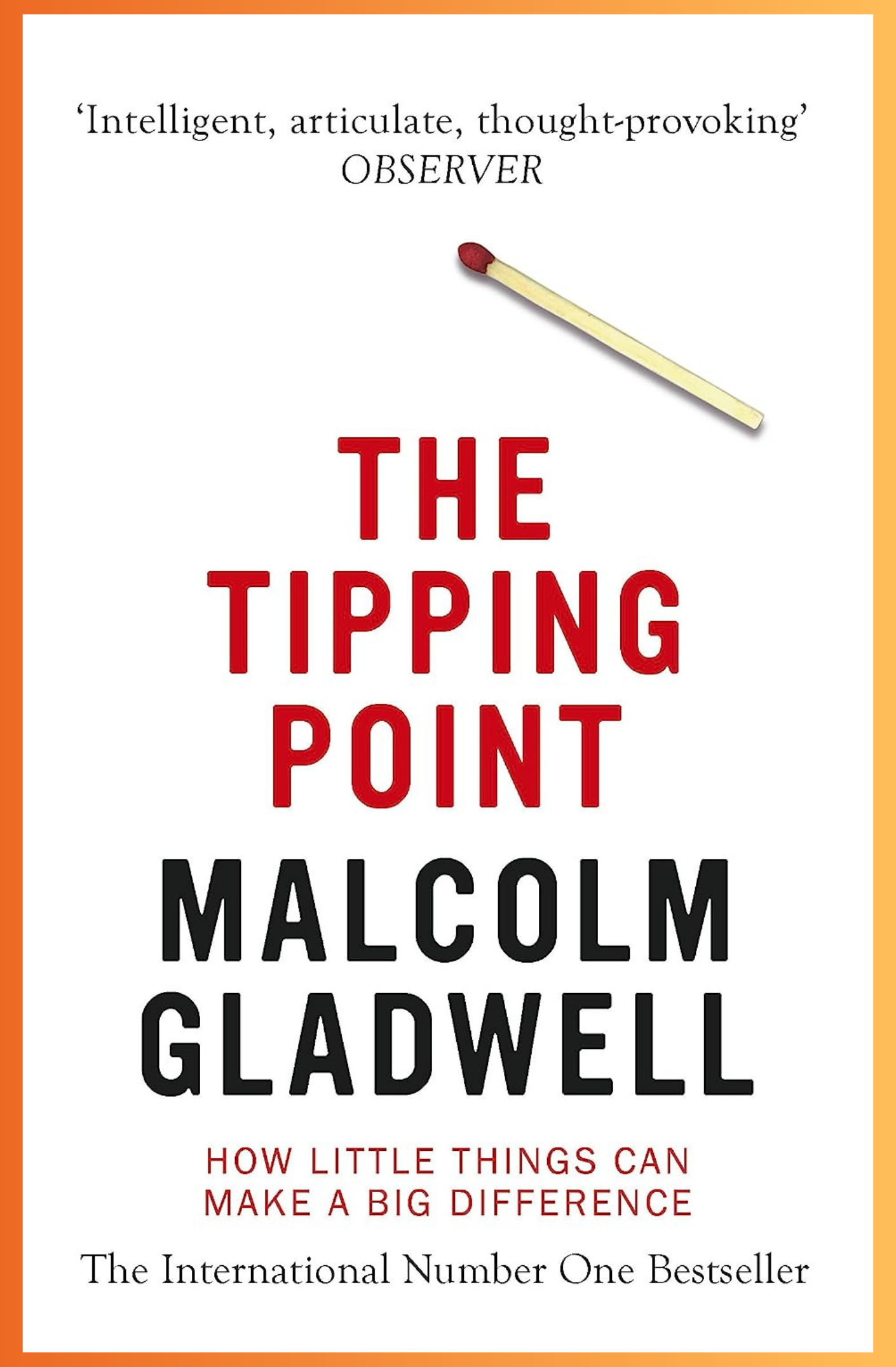
“The Tipping Point: How Little Things Can Make a Big Difference” is a groundbreaking book by Canadian journalist and author Malcolm Gladwell. First published in 2000, the book explores the phenomenon of ‘tipping points’ in social behavior, offering a new perspective on how ideas spread and social change occurs.
In “The Tipping Point,” Gladwell posits that social epidemics, like viral epidemics, follow a pattern: they start with a small, localized event and then suddenly ‘tip’ and spread rapidly. He identifies three key factors that can trigger these tipping points: the Law of the Few, the Stickiness Factor, and the Power of Context.
One notable quote from the book is: “Look at the world around you. It may seem like an immovable, implacable place. It is not. With the slightest push—in just the right place—it can be tipped.” This quote encapsulates Gladwell’s view of the potential for small changes to create large-scale effects.
Another insightful quote is: “Emotion is contagious.” Here, Gladwell emphasizes the role of emotional resonance in spreading ideas and behaviors.
Throughout “The Tipping Point,” Gladwell discusses various examples of social epidemics, from the sudden popularity of certain fashion trends to the rapid spread of diseases. He uses these case studies to illustrate his theories and provide practical insights into how tipping points work.
Gladwell also delves into the implications of the tipping point concept for marketing, public health, and social policy. He suggests that understanding tipping points can help us design more effective interventions and strategies for social change.
In the later sections, Gladwell examines the role of human connection and social networks in spreading ideas. He introduces the concept of ‘connectors,’ ‘mavens,’ and ‘salesmen’ as key players in social epidemics, highlighting their unique roles and characteristics.
In conclusion, “The Tipping Point: How Little Things Can Make a Big Difference” by Malcolm Gladwell offers a compelling exploration of social dynamics and change. Its blend of engaging storytelling, scientific research, and practical insights make it a must-read for anyone interested in understanding how ideas spread and how social change happens. The book serves as a powerful reminder of the potential for small actions to create big impacts, urging us to recognize and leverage the tipping points in our own lives and societies.