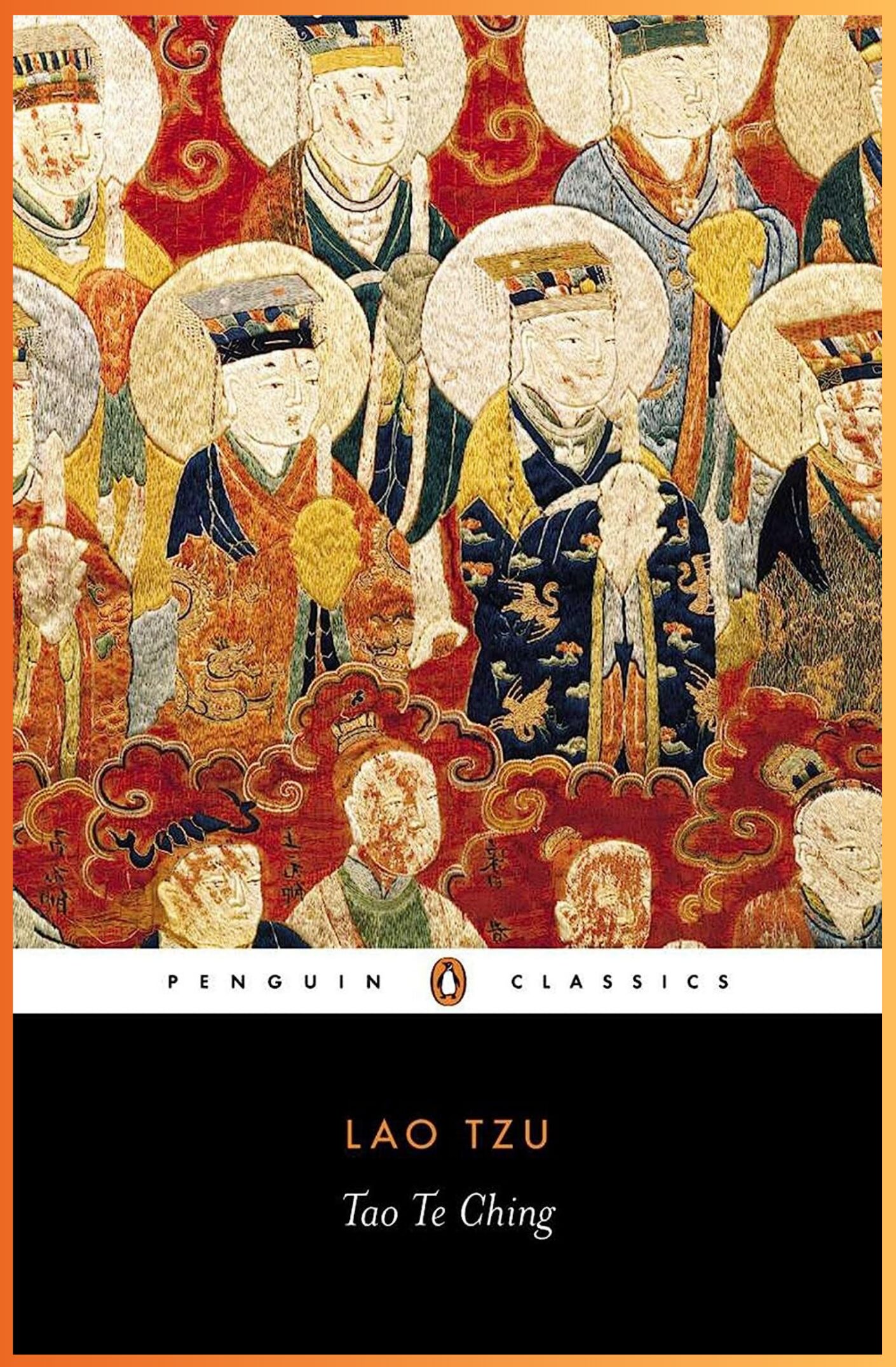
“The Tao Te Ching” is a foundational text by Lao Tzu, an esteemed philosopher of ancient China. Composed around the 6th century BC, this work remains a cornerstone of Taoism and one of the most influential texts in Chinese philosophy and culture.
In “The Tao Te Ching,” Lao Tzu presents his teachings on the Tao, or ‘the Way,’ a profound principle that underlies the universe and all existence. The book encompasses eighty-one short verses that explore the nature of the Tao, the virtue of living in harmony with it (Te), and the wisdom of non-action (Wu Wei).
One notable quote from the book is: “The Tao that can be told is not the eternal Tao.” This opening line introduces Lao Tzu’s conception of the Tao as an ineffable principle that transcends human language and comprehension.
Another insightful quote is: “In dwelling, live close to the ground. In thinking, keep to the simple. In conflict, be fair and generous. In governing, don’t try to control. In work, do what you enjoy. In family life, be completely present.” This verse encapsulates Lao Tzu’s guidance for living in accordance with the Tao.
Throughout “The Tao Te Ching,” Lao Tzu delves into various aspects of Taoist philosophy, providing a comprehensive exploration of these themes. He discusses topics such as the balance of opposites (Yin and Yang), the virtue of simplicity, the power of humility, and the wisdom of letting things take their natural course.
Lao Tzu also reflects on the implications of these ideas for leadership and governance. He advocates for leaders who rule with humility and in harmony with the Tao, suggesting that this approach leads to peace and prosperity.
In the later sections, Lao Tzu elaborates on the concept of Wu Wei, or ‘non-action.’ He suggests that true action does not involve struggle or force, but flows naturally from a deep understanding and acceptance of the Tao.
In conclusion, “The Tao Te Ching” by Lao Tzu offers a profound exploration of Taoist philosophy and wisdom. Its blend of poetic verses, philosophical insights, and practical guidance make it a timeless classic in spiritual literature. The book serves as a testament to Lao Tzu’s deep understanding of the mysteries of existence and his ability to communicate these insights through simple yet profound teachings.